
When we talk about modern Indian business, one name towers above the rest. A man who started with virtually nothing in his pockets, worked as a gas station attendant in a foreign land, and returned to India to build what would become the country’s most valuable corporate empire.
This is the story of Dhirubhai Ambani a visionary who did not just build a business, but rewrote the rules of Indian capitalism.
Humble Beginnings and the Spark of Ambition
Born in 1932 in a small village in Gujarat (Chorwad), Dhhirajlal Hirachand Ambani came from a modest family. At the age of 16, due to financial constraints, he moved to Aden (now part of Yemen) to work.
In Aden, he worked as a gas station attendant and a clerk for A. Besse & Co. While working there, he didn’t just watch the petrol pump meters spin; he observed how global trade worked, how shipping lines operated, and how commodities were priced.
The Lesson: Observation is the first school of entrepreneurship. Dhirubhai learned the fundamentals of global commerce long before he launched his own venture.
Returning to India: The Birth of Reliance
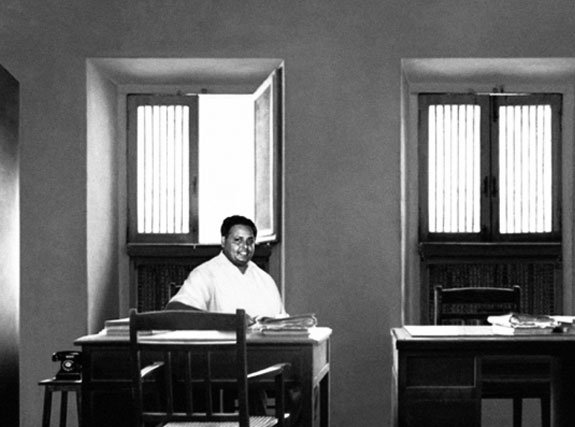
In 1958, Dhirubhai returned to India with just Rs. 50,000 and a burning desire to do something big. He started a small trading firm called Reliance Commercial Corporation with his cousin, Champaklal Damani, operating out of a tiny 350-square-foot room in Masjid Bunder, Mumbai, equipped with just a table, two chairs, a telephone, and a few standing assistants.
Initially, he traded in spices and polyester yarn. But Dhirubhai was never content playing small. While others imported yarn and sold it for quick profits, he spotted a massive gap in the Indian textile market: the soaring demand for synthetic fabrics.
The Core Business Strategies That Built the Empire
A. Backward Integration
Dhirubhai understood that relying on external suppliers for raw materials eats into profit margins and creates supply chain vulnerabilities.
He started with textiles (Vimal brand).
Then, he moved upstream into manufacturing polyester yarn.
From there, he expanded into petrochemicals, refining, and oil exploration.
By controlling every stage of production—from crude oil to the final fabric—Reliance achieved unmatched cost efficiencies and massive economies of scale.
B. Cultivating the Retail Investor (The Equity Cult)
Before Dhirubhai, the Indian stock market was considered a playground exclusively for wealthy elites and institutional brokers. Middle-class Indians kept their savings in fixed deposits or gold.
Dhirubhai changed this forever. When Reliance went public in 1977 with its Initial Public Offering (IPO), he actively marketed shares to the common public across small towns in India. He famously answered critics by saying, “Give the public their returns, and they will give you capital.”
This created the legendary “Cult of Equity” in India. Millions of middle-class retail investors became loyal shareholders of Reliance, turning the company into a financial powerhouse funded by the people.
C. Relentless Scale and Bold Risk-Taking
Dhirubhai believed in a simple philosophy: “Think big, think fast, think ahead.”
While traditional Indian business families of his era were risk-averse and grew slowly, Dhirubhai built massive manufacturing plants designed for global scales from day one. When critics called his factory sizes “unrealistic,” he built them anyway, proving that high volume drastically slashes production costs.
Overcoming Massive Challenges
Building an empire of this scale in license-raj era India (pre-1991 reforms) was not easy. Dhirubhai faced intense bureaucratic hurdles, regulatory roadblocks, and aggressive pushback from established corporate rivals.
However, his mastery over government relations, supply chains, and public sentiment allowed him to navigate crises that would have crushed ordinary businessmen. He turned every obstacle into an opportunity to expand faster.
Key Takeaways for Modern Entrepreneurs
If you are building a startup or a business today, Dhirubhai Ambani’s journey offers timeless lessons:
1. Vision Beyond Boundaries: Do not limit your ambition based on your current financial standing. Resources follow a compelling vision.
2. Understand the Consumer: Identify what the masses want and make it accessible and affordable for them.
3. Embrace Scale: Small businesses stay small because they fear taking the leap. To dominate an industry, you must build for scale early.
4. Democratize Trust: When you involve your customers and the public in your growth (like through equity or community), you build an army of brand advocates.
Conclusion
When Dhirubhai Ambani passed away in 2002, he left behind a business empire that generated a significant percentage of India’s total tax revenues and employed hundreds of thousands of people. More importantly, he proved that an ordinary man from a small village could challenge the established corporate order through pure grit, vision, and execution.
Today, his legacy lives on through his sons, Mukesh and Anil Ambani, with Reliance continuing to shape India’s digital, retail, and energy landscapes.
What are your thoughts on Dhirubhai Ambani’s business strategies? Which Indian business leader would you like us to cover next? Let us know in the comments below!